
From State Rep. Steve Reick:
The Battery Farm Proposal on Behan Road: It’s Really About Data Centers
This is the third installment of a series relating to a proposal to install a 600Mw Battery Energy Storage System (BESS) on 52 acres on Behan Road in Nunda Township.
Part One dealt with the bill passed during veto session that greased the skids for this type of development
and Part Two discussed the nuts and bolts of utility scale battery storage.
This installment will focus on the proposal itself, the developer’s bona fides, what kind of questions I want them to answer and to conclude, my own opinion of what’s really behind all this.
Throughout this discussion, keep in mind the fact that S.B. 25, that nightmare of an “energy” bill that was passed in October, makes it nearly impossible for local government to have any role in denying an application other than to bend over and tell the State:
“Thank you sir, may I have another?”
That’s because if the county denies the application, developers can run to the Illinois Commerce Commission, which will pat them on the head, dry their tears, override the county’s denial, and rubber stamp the application.
Eolian Energy (after the Greek god Aeolus, which is apt, given that the blessings he bestowed were also purely fictional) calls itself an “investor in energy projects,” including energy storage, solar, and wind generating developments.
The company is backed financially by BlackRock’s Global Infrastructure Partners and has similar facilities in Texas and California.
It has proposed building a standalone battery storage facility on about 52 acres off Behan Road near a ComEd substation to store excess power from the electrical grid and discharge it back when needed.
While I’ve not been able to find any dirt under their fingernails, there are a number of questions I would ask if I was sitting on a committee considering their application. Among them:
Financing:
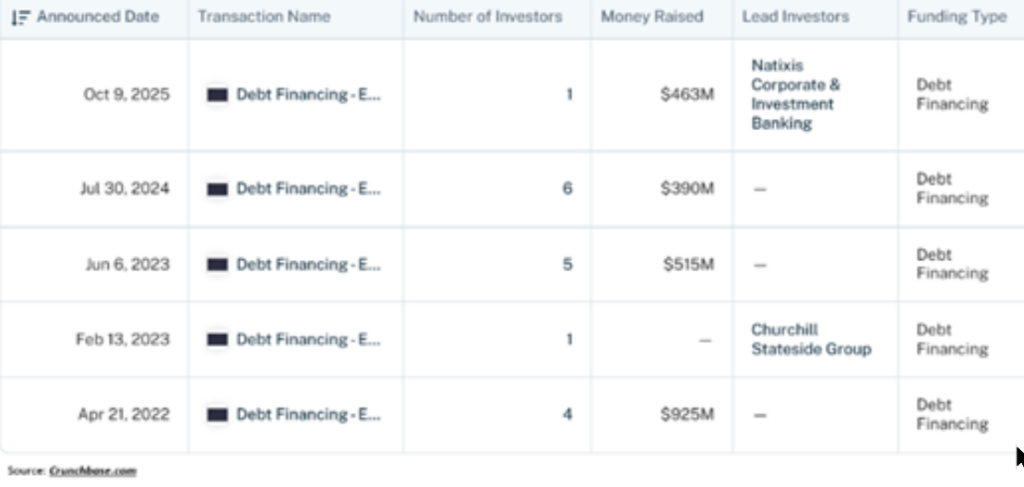
Eolian has built a number of utility scale battery facilities, the most recent being a project in Texas which would provide 350Mw of storage at a cost of $463 million.
The company has been on a pretty big spending spree over the past 4 years, raising a total of $2.3 billion on 5 projects, all of it borrowed.
How much are they going to borrow to build this thing?
Since the company is privately owned, we can’t see how much of their own money they’ve put into the deals, and they’ll say that since they’re part of BlackRock, money isn’t an issue.
But BlackRock isn’t in business to lose money, so knowing how much equity is at stake is something they should be obliged to tell us.
We should also find out if this project is going to be used as security for all that other debt and if those other facilities will be used as collateral on what they’re going to borrow to finance this project.
Revenue
Where’s the money going to come from to pay for this after it’s built?
According to the Clean Grid Alliance, one megawatt of utility-scale solar power in Illinois typically requires between 7 and 10 acres of land.
Since there aren’t 4,200-6,000 acres of vacant land sitting around Behan Road to build solar farms, the most likely source of revenue (aside from subsidies from the state) is to buy electricity from Com Ed when the price is low at night (when demand goes down) and sell it back to them when it’s high (peak load during the day).
From the standpoint of pure economics (hang on English majors, you’re going for a ride) this makes absolutely no sense in a world where the power generators can adjust baseload capacity by turning a dial.
If they can save money by cranking down generation during low demand, why sell it to some battery company at a discount only to pay rack rate to get it back when demand goes up, especially when it’s good for only about 4 hours?
Who pays the difference? T
The ratepayers.
Of course, Eolian is counting on being there on that glorious day when the promises of CEJA come true and there’s no more fossil-based energy being produced and all their stored power comes from wind and solar, which are nowhere near Behan Road.
Oops.
Which leaves us with the question of how much of the $8.1 billion called for in S.B. 25 will be directed their way in the form of subsidies?
Siting
Aside from its proximity to a Com Ed substation, there isn’t a lot of benefit to building it there.
So let’s look at the other issues that plague this proposal.
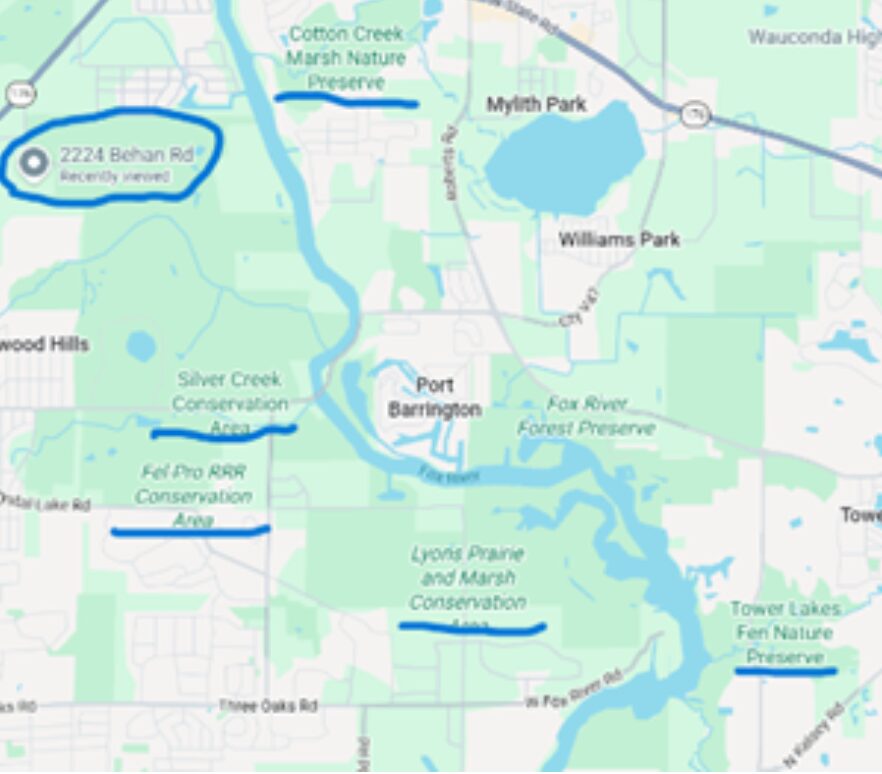
The project is to be sited on 52 acres located at 2224 Behan Road, just off of Route 176.
As you can see from the map, it’s surrounded by the Cotton Creek Nature Preserve, the Silver Creek Conservation Area, the Fel-Pro RRR Conservation Area, the Fox River Forest Preserve, the Lyons Prairie and Marsh Conservation Area, and the Tower Lakes Fen Nature Preserve, which at 8 miles by road (and a lot closer as the crow flies) is the furthest conservation area from the proposed site.
It’s also 1.5 miles from the Fox River.
Oh, before I forget, S.B. 25 also removes the ability for counties to require developers to provide US Fish and Wildlife review.
If you read my Part Two, you’ll learn what happens when these types of areas are exposed to fallout from lithium-ion fires, which aren’t all that rare.
But remember, this is all about saving the environment.
Risk Mitigation
What steps will be taken to mitigate risk?
As I discussed in my earlier post, given the location, onsite water storage will be needed to assure an adequate water supply to fully extinguish a fire.
Are these mitigation issues considered in the proposal?
Also, if the Village of Prairie Grove decides not to annex the entire site (17 of the 52 acres is within village limits, the balance is in unincorporated area), will this force Eolian to scale back its plan or will it pack the batteries onto a smaller footprint, making it more likely that if one battery unit catches fire it will spread more easily?
Will the latter option still comply with the risk mitigation requirements set out in NFPA 855?
The Dirty Little Secret
This whole thing isn’t about reducing our carbon footprint, saving the planet or lowering the cost of energy.
It’s about data centers.
I’ve been told by the Village President of Prairie Grove that he’s been fielding phone calls like crazy from people who want to put data centers near this precious battery farm.
These facilities draw data center vultures like moths to a flame and BlackRock, which holds the whip hand on Eolian, is up to its neck in data center development.
Couple that with the fact that the Powers That Be in Springfield love data centers like a glutton loves his lunch and you have the perfect example of crony capitalism.
I’m personally of the opinion that in the not-so-distant future this AI bubble is going to burst like the Tulip Mania of 1634, and that all these buildings now housing data centers will be used for RV and boat storage.
I mean, how many Tik-Tok memes and cat videos do we need?
Part of my job as your representative is to try my best to inform you of the risks I think we face with an out-of-control government that thinks money grows on trees.
I know I’m fighting an uphill battle, and that I’m usually on the losing side, but I owe it to you to tell you why I voted “no” on this fiasco of a bill and how I think it’s going to work to the detriment of the people of McHenry County.

Opponents to Lithium Battery Farm Start Petition - McHenry County Blog
[…] Farm on Behan Road – Part 1 Reick Critiques Battery Storage of Electricity – Part 2 Steve Reick Adds More Information about Battery Farm Approval Sought in His District – Part 3 Previous Post The Personal Property Tax Next Post Wilcox & DeWitte Attack Domestic […]